[Technical post] The Agentic Loop: Orchestrating GPT-5.4, Gemini, and Codex for Algorithmic Development
Building complex algorithmic code requires more than just a single prompt to a single model. To achieve production-grade results, we can implement an agentic workflow that treats different AI models as specialized members of a development team. This process leverages the unique reasoning strengths of GPT-5.4, the structural capabilities of Gemini, and the raw coding power of Codex. By following a multi-stage pipeline, we ensure that the architecture is sound, the logic is mapped out, and the final output is rigorously tested.
Step 1: Establishing the Foundation with Codex
Before any logic can be written, you must set up your primary execution engine. OpenAI’s Codex is the backbone of many modern programming assistants and is designed specifically to translate natural language into high-quality code. To get started, you will first need an API key from OpenAI that includes access to the Codex series, such as the code-davinci models. While you can interact with the API directly using the OpenAI Python library, most developers find the most efficient route is through the GitHub Copilot extension in VS Code. Simply install the extension, sign in to your authorized account, and your environment will be ready to process the advanced prompts we will generate later in this workflow.
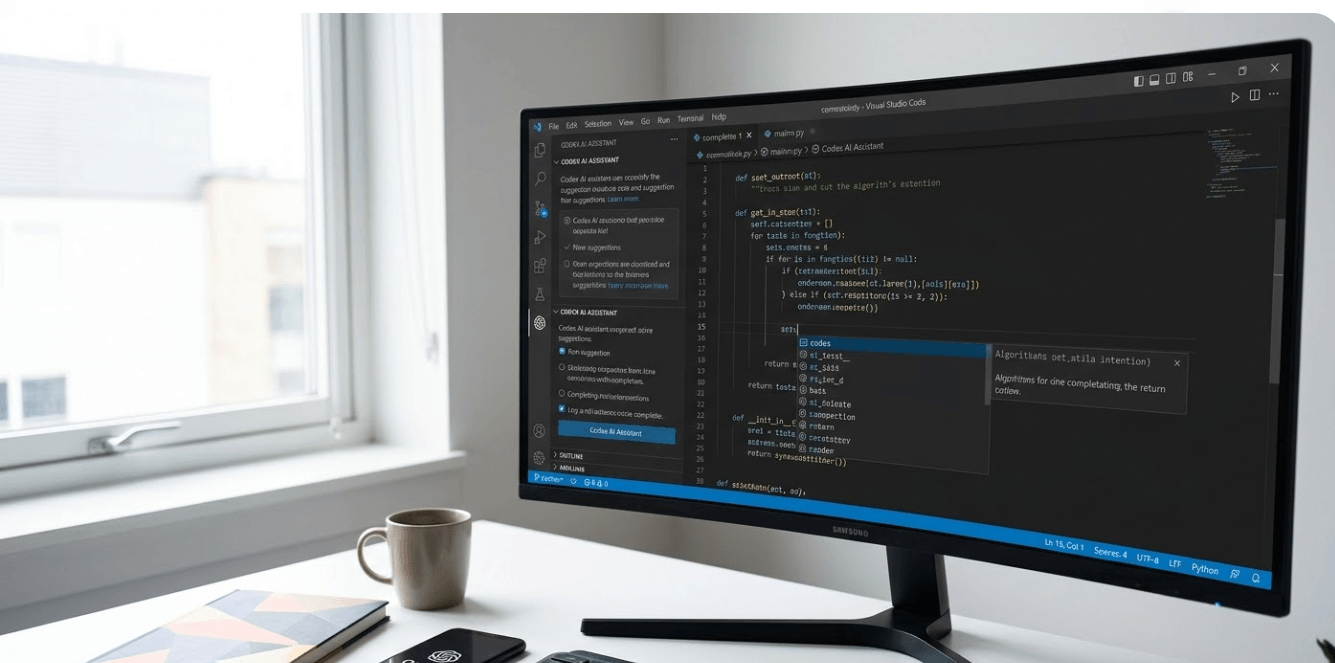
Notably, while Claude Code has gained significant popularity for its interactive terminal experience and multi-file refactoring, it often operates with a "developer-in-the-loop" philosophy that can introduce friction during the heavy lifting of algorithmic creation. Claude Code is excellent for understanding existing codebases and providing a conversational interface for debugging, but it tends to be more cautious and token-heavy, often asking for frequent clarifications that can break the flow of a complex development task. In contrast, OpenAI’s Codex is engineered for a "set and forget" style of autonomous execution that is far better suited for the high-intensity logic required in algorithmic projects.
To this end, the primary advantage of Codex lies in its sheer execution speed and terminal reliability. In the current 2026 landscape, benchmarks like Terminal-Bench 2.0 show that Codex consistently outperforms Claude Code in executing complex CLI tasks and raw script generation. Because algorithmic code often relies on precise mathematical transformations and isolated logical modules, the autonomous sandbox environment of Codex provides a cleaner workspace. While Claude might excel at the "soft" skills of software engineering—like documentation and aesthetic UI choices—Codex focuses on the "hard" logic, delivering high-performance code with significantly fewer tokens. This efficiency not only reduces costs but also prevents the "context drift" that can happen when an AI model becomes overly verbose during a long-running task.
Step 2: Architectural Design via GPT-5.4 Thinking
The most common mistake in AI development is asking for code too early. Instead, we begin with GPT-5.4 Thinking to act as our Lead Architect. In this stage, you provide a comprehensive description of the program’s goals and requirements, treating the model as a senior technical consultant. You should explicitly ask the model to focus on high-level design rather than syntax, ensuring that the logic is decoupled from the final implementation language. This includes defining the necessary classes, establishing robust data pipelines for how information moves through the system, and identifying appropriate design patterns like Factory, Singleton, or Strategy to ensure the code remains maintainable as it grows.
By using the "Thinking" variant of the model, you tap into a deeper reasoning process that goes beyond simple pattern matching. GPT-5.4 Thinking is capable of running internal simulations of the logic you propose, allowing it to anticipate edge cases and scalability issues—such as race conditions in parallel processing or memory leaks in long-running data streams—before they ever become bugs in the codebase. This phase should result in a detailed technical specification document that outlines the internal state management of the program and the specific responsibilities of each module. When the architect defines a clear contract for how components should interact, it eliminates the "hallucination" risk that often occurs when an AI tries to guess the developer's intent mid-code.
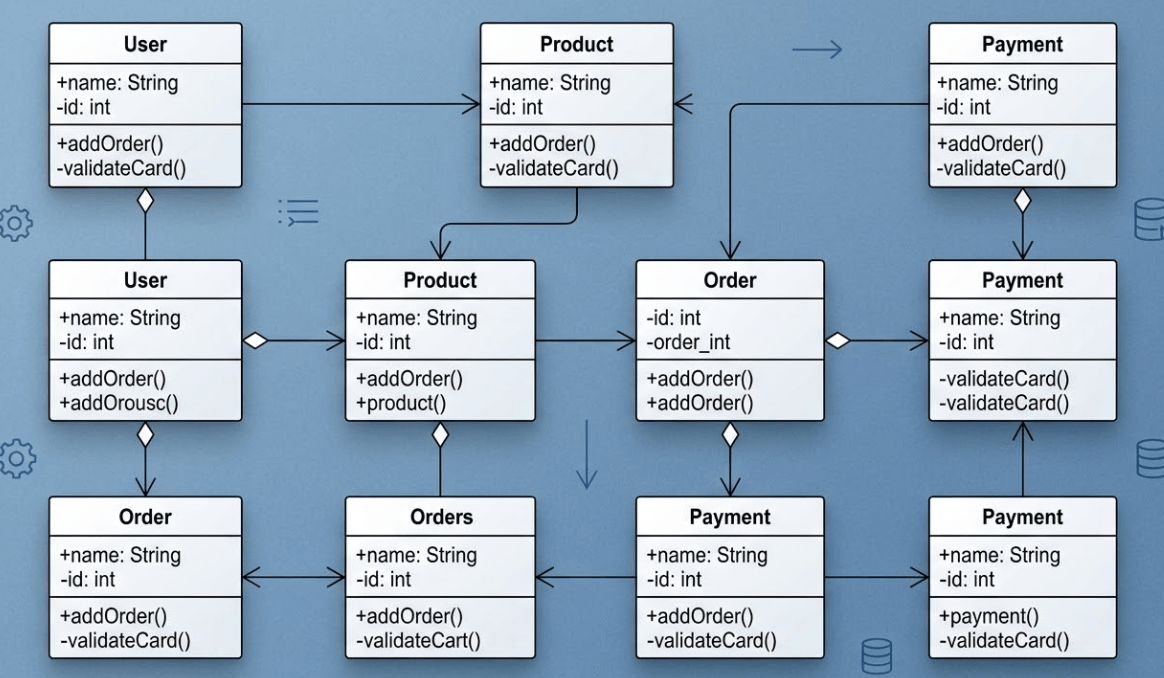
Furthermore, this architectural deep dive serves as a critical filter for complexity. You can use this stage to ask the model to evaluate the trade-offs between different algorithmic approaches, such as choosing between a recursive solution or an iterative one based on expected data volume. By the end of this session, you should have a blueprint that covers error handling strategies, logging requirements, and a clear definition of the input-output interfaces. This ensures that when you eventually move to the generation phase, the "Builder" model isn't just writing code, but is filling in a well-defined structure that has already been vetted for logical soundness and structural integrity.
To initiate this architectural phase, your prompt should explicitly steer the model away from immediate code generation and toward high-level logic. For instance, you might say: "Act as a Senior Software Architect to design a high-frequency trading algorithm. Do not write any implementation code yet. Instead, provide a comprehensive architectural specification that defines the primary classes, a data pipeline for processing sub-millisecond market feeds, and a modular error-handling strategy. Please analyze the trade-offs between a multi-threaded event-driven pattern and a sequential polling approach for this specific use case, and outline how the system will manage state consistency during sudden volatility spikes. Your output should focus on the interaction between the data ingestion layer and the execution engine, including a description of the interfaces and the specific design patterns—such as the Observer pattern—required to ensure the system is both scalable and maintainable."
Step 3: Structural Mapping with Gemini
Once you have a solid architectural narrative from GPT-5.4, you pass that output to Gemini. Gemini excels at handling large context windows and organizing abstract ideas into structured formats, making it the perfect "Project Manager" for your agentic workflow. At this stage, you should request a formal Class UML diagram and a comprehensive development working plane. The working plane serves as your project roadmap, breaking the build down into manageable, incremental modules that prevent the downstream coding models from becoming overwhelmed or losing track of the global state. By translating the architect's narrative into a visual and sequential structure, you ensure that every dependency is accounted for before the first line of code is written.
In addition to the roadmap, you must ask Gemini to identify and generate "skill files." These are specialized context documents that outline the specific technical requirements, third-party libraries, or complex mathematical protocols that the program will need to function. For instance, if your algorithm requires a specific implementation of a Fast Fourier Transform or a unique cryptographic handshake, Gemini can isolate these as discrete "skills" that the builder model can reference. This prevents the final code from being generic; instead, it becomes a precision instrument tailored to the exact environment and constraints defined during the mapping phase.
This step turns a theoretical design into a concrete, executable engineering plan by bridging the gap between abstract reasoning and technical implementation. Gemini’s ability to "see" the entire project at once allows it to spot potential bottlenecks in the development sequence—such as a module that requires an output from a component not yet designed. By finalizing the structural mapping here, you provide a clear, unambiguous set of instructions for the next agent in the chain, ensuring that the development process remains organized, logical, and significantly less prone to the structural drifting that often plagues complex AI-generated projects.
Step 4: Creating Technical Prompts for Codex
With the roadmap in hand, you return to a fresh session of GPT-5.4 Thinking. This reset is vital to ensure the model isn't biased by previous conversational clutter or "contextual drift" that can occur over long-form dialogues. Your goal here is to translate the working plane into a hyper-specific technical prompt designed for Codex. You are essentially acting as a Prompt Engineer, taking the Project Manager's requirements and technical specifications and turning them into the exact language that will trigger the best possible output from the coding model. This intermediate step ensures that Codex receives instructions that are optimized for its training data, resulting in much cleaner and more accurate algorithmic logic that adheres strictly to the predetermined architecture.
During this phase, you should instruct GPT-5.4 Thinking to focus on "Constraint-Based Prompting." This involves more than just describing the function; it requires defining the exact input types, the expected time complexity, and the memory constraints of the algorithm. By providing Codex with a prompt that includes the specific "Skill Files" identified by Gemini and the exact class interfaces defined in the UML, you eliminate ambiguity. You are effectively providing the builder with a set of blueprints so detailed that the room for creative hallucination is virtually non-existent. This level of precision is what allows the agentic workflow to produce code that actually compiles and runs on the first or second attempt.
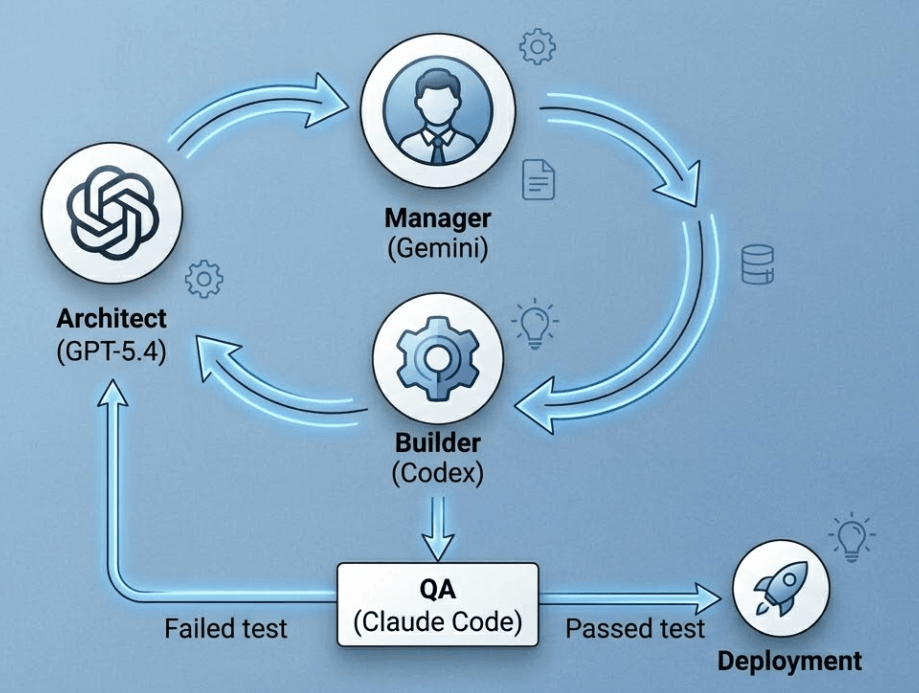
Furthermore, this step allows you to define the "Definition of Done" for the specific module being developed. You can ask GPT-5.4 to include specific comments, docstrings, and error-handling requirements within the prompt it generates for Codex. This ensures that the code returned is not just functional logic, but professional-grade software that follows standard naming conventions and includes internal documentation. By using one model to "engineer" the prompt for another, you leverage the advanced linguistic reasoning of GPT-5.4 to communicate with the specialized code-generation weights of Codex in its own "native tongue," maximizing the efficiency of the entire pipeline.
Step 5: Code Generation and the Testing Loop
After Codex generates the initial code, the final phase of the agentic loop begins. Take the code and move it into Claude Code or back into GPT-5.4 to design a comprehensive testing suite. It is crucial to develop both outside system tests, which check the program's behavior against the original requirements, and specific unit tests for every method defined in your UML. By decoupling the generation of the code from the generation of the tests, you create a "blind" audit system where the QA agent must interpret the logic based on the original architectural specifications rather than just mirroring the builder’s potentially flawed implementation. This cross-model validation is the key to catching subtle logical errors that a single-model approach would likely overlook.
The testing phase should be aggressive and multifaceted. You should specifically task your QA agent with developing "edge-case stressors"—tests designed to push the algorithm to its breaking point using null inputs, maximum data volumes, or unexpected data types. If you are working on a financial algorithm or a data processing pipeline, this is the stage where you verify that your error-handling logic correctly catches exceptions without crashing the entire system. Because you are using a model like Claude Code or GPT-5.4 Thinking for this, you can ask for a detailed explanation of why a specific test failed, providing you with a clear debugging path that leads directly back to the source of the issue.
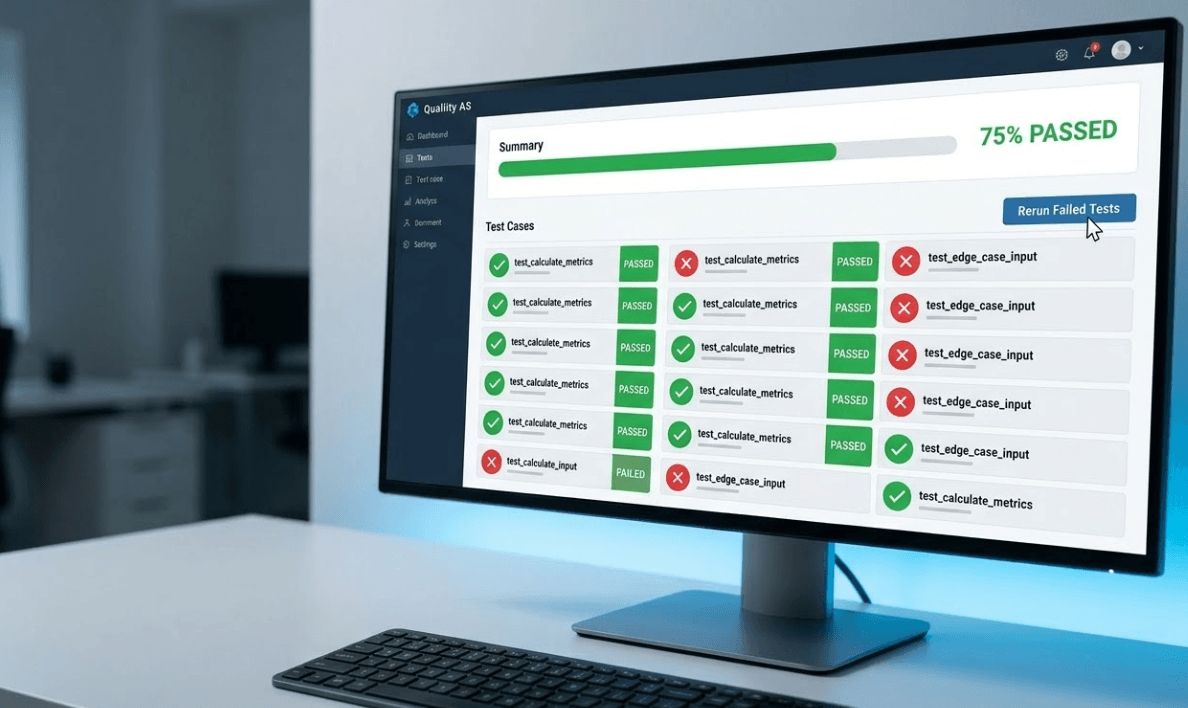
If the tests fail or the logic feels incomplete, you iterate through the process again, starting from the prompt refinement stage. This is not a sign of failure but a core component of the agentic workflow. Each iteration refines the prompt given to Codex, incorporating the feedback from the failed test cases to produce a more resilient version of the code. This iterative cycle between the Architect, the Builder, and the QA Engineer is what separates a simple AI script from a robust, professional-grade algorithmic system. By the time the code passes every test in your suite, you have not just a working program, but a documented, verified, and battle-tested piece of engineering that is ready for production deployment.
Closing remarks
The workflow outlined in this post represents the absolute gold standard for algorithmic development as of March 2026. By orchestrating the deep reasoning of GPT-5.4 Thinking, the structural organization of Gemini, and the raw execution power of the latest Codex builds, we are able to bridge the gap between abstract architectural concepts and battle-tested production code. This multi-agent synergy allows developers to act as high-level orchestrators rather than manual scripters, ensuring that complexity is managed at every layer of the stack.
However, it is important to remember that in this era of "exponential engineering," the tools we use are changing almost as fast as the code they generate. Just this month, we have seen the consolidation of GPT-5.4’s agentic capabilities and the introduction of native computer-use features that may soon automate the "testing loop" even further. While Codex remains the superior choice for pure algorithmic logic today due to its decisive technical output and token efficiency, new interactive paradigms like Claude Code are rapidly closing the gap in multi-file refactoring and codebase navigation.
Staying ahead in 2026 means remaining "model agnostic" and being ready to swap specialized agents as their capabilities evolve. The core principles of this workflow—architecting before coding, structural mapping, and isolated testing—will remain relevant regardless of which model holds the top spot on the leaderboard. As we move deeper into this year, the most successful developers will be those who master the art of the agentic loop, treating their AI tools not as simple assistants, but as a dynamic, evolving team of digital coworkers.