There is No One AI Frontier - There Are Two (And That is Good News for Humans)
Maps begin as stories. Somewhere, a traveler describes a horizon, a river that bends like a wrist, a dune that sings when the wind is right. Others follow and leave markers, cairns, scraps of cloth, a path gradually furrowed by many feet. Only later are the coordinates fixed and the myths trimmed into margins. Knowledge grows in much the same way: a rumor of possibility, a sketch, a path, an atlas. We inherit this atlas and mistake it for the territory. We carry it confidently until the road weakens and the wind begins to erase our footprints. It is there, in the bright silences of the unknown, that one learns the difference between traveling within a map and deciding to draw a new one.
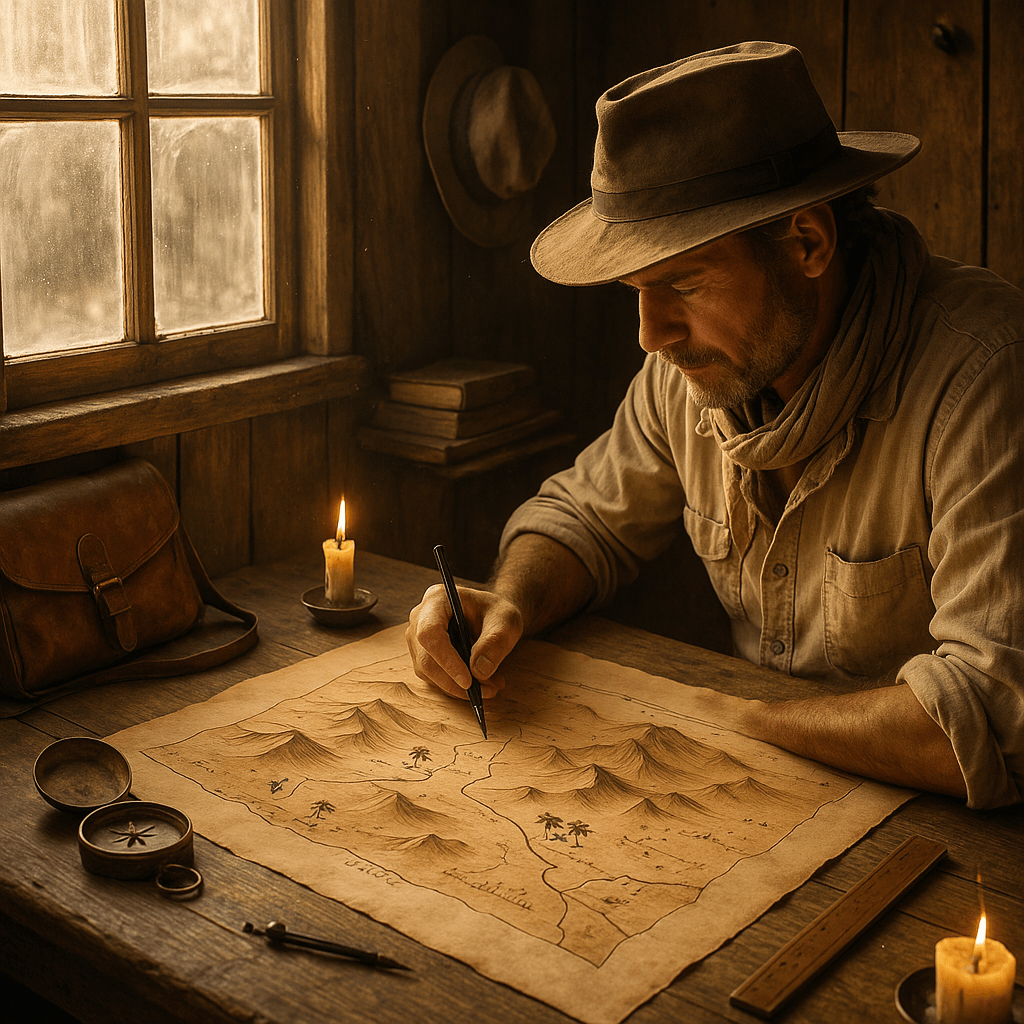
Map is a story one lived.
Artificial intelligence (AI), for all its brilliance, mostly travels within the map. It moves swiftly, purposefully, and with impeccable memory. It knows where the libraries are, and it retrieves the exact shelf. It speaks the dialect of every caravanserai and can barter in any market. To the hurried eye, this looks like discovery - and to same extend, it is a discovery. But the desert makes finer distinctions. Between the oases there are corridors of hard sand, well packed by passage, and there are dunes that seem similar but shift beneath the foot. The former reward speed; the latter demand judgment. The former can be conquered by a better compass; the latter ask why one is walking at all.
Imagine the human archive as a constellation of oases: physics beneath date palms, law among fountains, music in courtyards where the nightingales argue. Each oasis is dense with patterns, stories, and techniques. The air is full of instruction. From one to another stretch familiar caravan routes, some straight and guarded, others winding and half-forgotten. Modern AI is a master of these routes - it learns their bends and short cuts, it anticipates the next well, it carries a ledger of exchange so detailed that trading becomes nearly frictionless. Within and between oases, it interpolates with extraordinary fluency. New tents appear where there were none yesterday; markets harmonize; travelers who once took weeks now arrive before sundown.
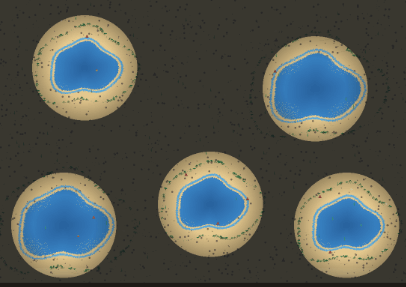
The knowledge map - we have many oasis of knowledge that AI can interpolate but hardly extrapolate.
From a distance, such interpolation can look like a new oasis rising out of heat. The mirage is understandable. When a model fills the gaps at a resolution that no single scholar would attempt, the ground seems richer than it was. When a model brings a spice from one market to another and composes a dish that no one had thought to serve, guests call it invention. When a model organizes scattered notes into a coherent song, the melody feels born rather than assembled. Yet the wells that feed these delights were already there. The system has densified the paths, braided them elegantly, and given the known a new sheen. It has not yet persuaded the desert to become a garden.
There is therefore not one frontier but two. The first is the frontier of capability within the map, the steady expansion of competence across everything that already has a signpost, however weathered. The second is the frontier of novelty beyond the map, the harder art of deciding that the signs point in the wrong direction, that the water might lie where no one expected, that a new oasis is possible in a place formerly read as empty. The first is advancing with remarkable speed. The second, if it moves, moves mostly because humans shoulder their packs and step into the unpromised distance.
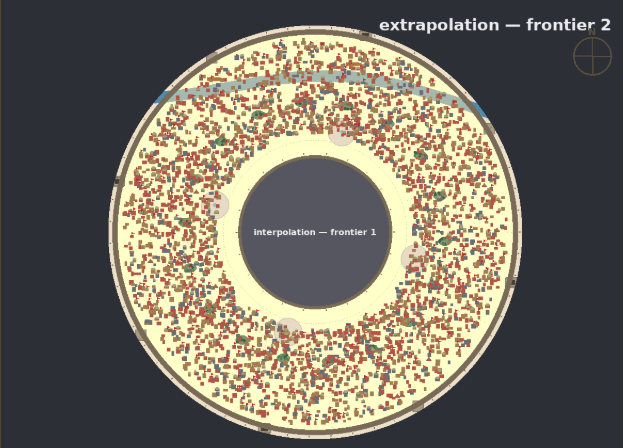
Two frontiers - one inside, one outside, both hold great secrets. One will shortly ruled by AI, the other - I am not so sure.
The reasons are practical and revealing. Learning from the archives binds one to the archives. Objectives favor what can be measured, and what can be measured usually belongs to the already walked paths. Reliability leans toward conservatism, and conservatism is the virtue of known roads. Feedback in the dunes is sparse and delayed; there is little gradient to follow, only intuition and the occasional glint of something that might be stone or might be water. Many of the turning points in art and science appeared not as extrapolations from prior lines but as reorientations of desire, attention, or risk. They were wagers placed by embodied minds who tolerated heat and the possibility of arriving nowhere. Systems that listen chiefly to texts and images attend to the shadows cast by such wagers rather than to the wagers themselves.
It is tempting to dress this difference in mystique, to claim that the desert forbids machines by principle. That is unnecessary. What matters is function. Within the map, the machine is a peerless companion. It remembers every proverb, it cross-references every rumor, it draws itineraries that spare time and reduce waste. It connects scholars who once lived in different centuries and lets a novice command the reach of a polymath. Beyond the map, the machine is cautious because we have taught it to be cautious. We praise it for safe arrivals and punish it for getting lost. We ask it to satisfy the standards of places we already know. The desert is not impressed by standards; it responds to stubbornness, to attention, and to experiments that leave blisters.
This division should not worry us. It should steady us. Let the systems saturate the known, closing the distance between competence and excellence in domains where excellence was once rare. Let them pave the caravan routes, reconcile the ledgers, translate between guilds that could not hear one another. Then let humans choose destinations. Let us practice the difficult craft of question-making, which is the compass of the second frontier. Let us cultivate dissonance where scorecards prefer harmony. Let us run some experiments that do not yet have tidy metrics, accepting that a portion of them will return with cracked flasks and beautiful failures.
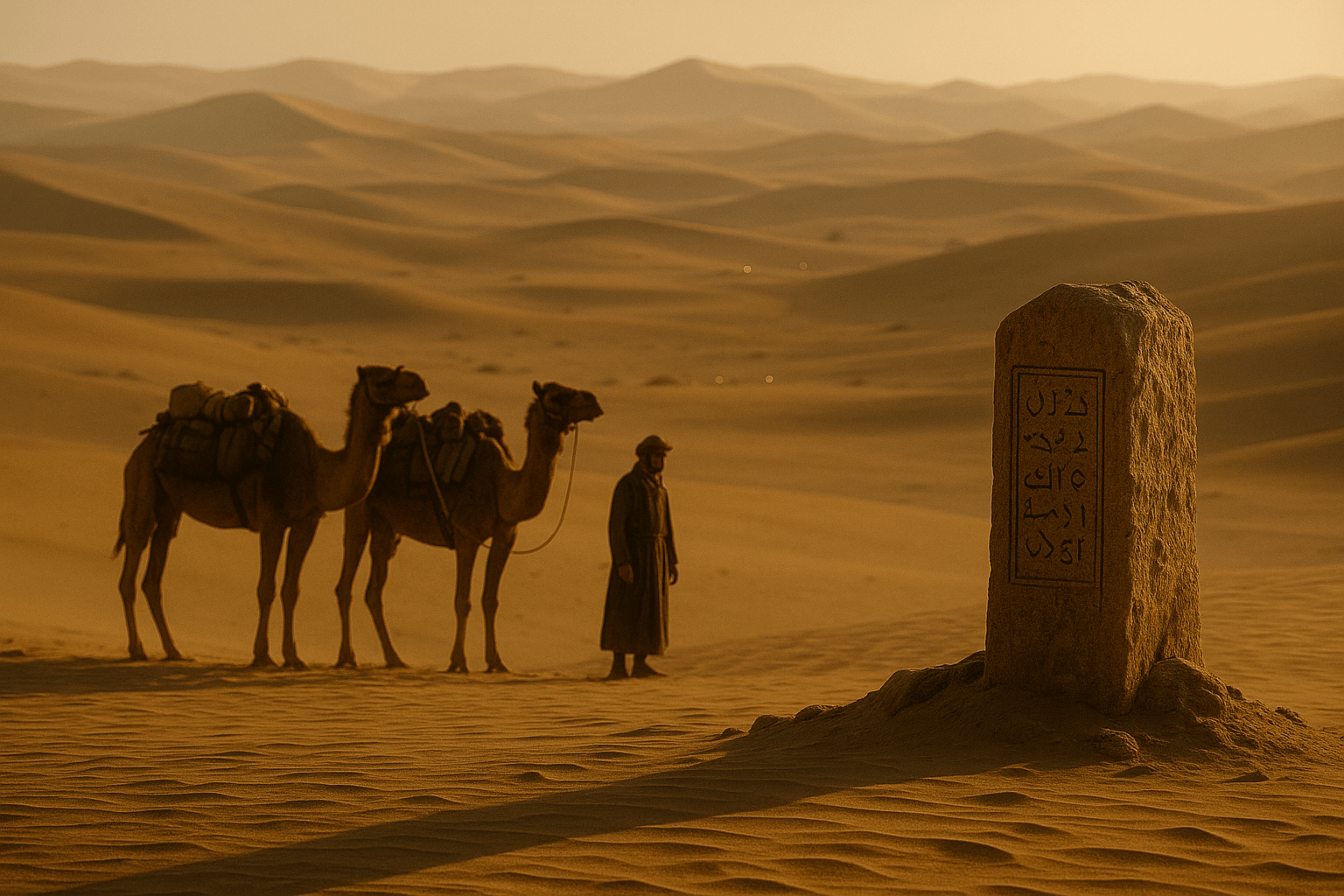
Exploring the edge.
Occasional exceptions will be cited as proof that the desert has already surrendered. A proof emerges that no textbook had recorded, a design appears that surprises its designers, an algorithm is found by a search that no one supervised in detail. These moments deserve attention and respect. They show what is possible. They do not yet show what is prevalent. Most often, careful inspection reveals recombinations whose ingredients were, if not explicit in the archive, then present as hints and affordances in the way the archive was arranged. The oasis was closer than we thought; the mirage was a lensing of familiar light.
One can imagine a future in which objectives grow stranger, environments become more interactive, and the instruments for gathering feedback widen beyond language into experiment, fabrication, and play. Perhaps then the second frontier will admit new traveling companions. Until then, clarity helps. We can move quickly along the first frontier without promising what it cannot give. We can protect the second frontier without sentimentality, by funding curiosity that does not pay on schedule, by honoring disciplines that test hunches against the world, by educating for judgment alongside competence.
The point is not to deny what these systems accomplish. It is to place the accomplishment where it belongs on the map. The first frontier will change daily life profoundly. When the ledgers are balanced, when the roads are smooth, when conversation with the archive is immediate, each person will feel the presence of a tireless research group humming in the background. That alone is civilizational. Yet the emergence of genuinely new oases will continue to depend on people who are willing to leave shade, who can stand in the white glare and ask whether water might collect where the old maps are silent.
In the end, the desert offers a kind of courtesy. It does not pretend to be less vast because our models are eloquent. It does not punish eloquence either; it simply asks what one intends to do with it. There are two frontiers, and we should be grateful. Let the first make us faster, more connected, and more precise. Let the second remain difficult, because difficulty is the price of meaning. Between the palm and the mirage stretches the ground on which human beings still choose, still err, still discover. That ground is ours to cross.